The Australian Digital Marketing Guide 2026
Everything an Australian business needs to craft a winning digital marketing approach for 2026

The role of digital marketing is more important in 2026 than ever before.
For as long as I’ve been writing about digital marketing, one thing hasn’t changed, having a practical marketing strategy is crucial for the present and future health of your business. Driving demand through consistent marketing efforts helps protect your business from slow periods, ensuring stable sales and profit.
The rapid speed of technological change in recent years means2026 brings a fresh set of challenges. We’re navigating uncertainties around AI, the macroeconomic stability of the world, attribution, privacy and data. AI and machine learning continue to evolve, sometimes as tools, sometimes as disruptors. As always, there’s the ongoing battle to get the marketing mix on point.
One thing history has taught us is that businesses that invest in marketing during tough times usually come out on top when the market swings and the good times roll in.
If you’ve had to pull back on your marketing over the past year, don’t worry,it’s never too late to get moving again.
I encourage you, as an in-house marketer to keep learning from the past. Stay focused on keeping your marketing front and centre, because it’s the businesses that adapt, keep marketing as a priority and act decisively during times of uncertainty that thrive.
All the best,
James Lawrence
Chapter 1: Australian Marketing Strategy and the Big Picture in 2026
What You Need to Know to Ensure Your
Marketing Plan Has Solid Foundations
1. Digital Marketing Strategy Foundations
The term ‘strategy’ is one of the most overused and often misunderstood words in the marketing world. As you’re aware, running ads on Google or publishing blog articles without a clear objective doesn’t involve strategy. It’s blind action without direction and doesn’t yield strong results. A tight digital strategy starts with a clear understanding of your objectives and the steps needed to get you there.
What does a good digital marketing strategy look like?
A good digital marketing strategy is your roadmap to achieving clear marketing objectives or business goals using defined marketing channels over a set period. It identifies your target audience, positioning and messaging while integrating appropriate channels like SEO, Google Ads, LinkedIn, Facebook, TikTok and email. Each of these will be explored in depth throughout this guide.
For Australian business, aligning digital marketing goals with overall business objectives usually revenue growth is critical. Whether you're a local FMCG company or an international B2B SaaS business, a well-crafted marketing strategy is essential to generate leads, sales and customers.
Strategy vs. tactics: What’s the difference?
It’s common to confuse strategy with tactics. Think of strategy as the what and why, while tactics are the how. For example, your strategy might be to might be to grow market share by becoming the most visible and trusted brand in your category during the research phase of the buying journey. The tactics are the specific activities used to deliver that strategy. These might include improving search visibility through SEO, creating educational content that answers common customer questions, and optimising key landing pages to capture demand.
How to create an effective digital marketing strategy?
There’s no universal formula for a ‘successful’ digital marketing strategy. However, there are three key steps to ensure you’re creating a strategy that connects with your audience, makes the most of your resources and budget, and drives revenue.
Marketing thought-leader, Mark Ritson, explains how to do this through three essential phases:
- Diagnose the situation or problem
- Develop a clear strategy
- Plan the tactics to deliver on that strategy
Phase 1: Diagnose the situation
Start by reviewing your previous marketing efforts. Did you achieve your goals? What performed well? What challenges held you back? These insights are invaluable in setting your metrics for success.
Next, conduct research. If results have fallen short, a SWOT analysis (strengths, weaknesses, opportunities and threats) or in-depth market research can help you identify areas for improvement. Then, focus on market segmentation, pinpointing 3-5 audience segments most aligned with your product or service. Your strategy isn’t about what your company or what you offer it’s about your audience.
Phase 2: Develop a clear marketing strategy
From your audience segments, define your target audience. Are you focusing on:
- Lapsed customers?
- Leads who haven’t converted?
- New customers unaware of your offering?
Take a closer look at your audience’s behaviour and preferences using tools like buyer persona grids to visualise their motivations, challenges and decision making processes. This deeper understanding will help you set SMART goals (specific, measurable, achievable, realistic and timely) that become the foundation of your strategy.
Phase 3: Plan the marketing tactics
Your tactics will depend on your business type and goals. For example, an eCommerce business might focus on optimising pages for SEO and launching Google Shopping campaigns, while a B2B SaaS company may prioritise LinkedIn lead-gen ads or webinars.
Budget plays a crucial role invest strategically in tactics that offer the best ROI, whether that’s refining Google Ads strategies, creating targeted content or implementing local SEO campaigns.
What are the top qualities of a digital marketer?
The top qualities of a digital marketer include problem solving, strong communication skills, the ability to think strategically and analytically and the capacity to collaborate in fast-paced environments.
How these qualities are applied depends on your role:
- Agency Marketers: Strong organisational and task management skills are essential for managing multiple clients effectively.
- Specialists: Analytical thinking and prompt decision-making are critical for optimising campaigns.
- In-House Marketers: Prioritising tasks, focusing on strategy and problem-solving are key to aligning marketing efforts with business goals.
Additionally, knowing when to outsource to an agency versus managing tasks in-house is a critical skill for in-house marketers. And if you’re curious about how you can show up in the best way as a marketer, you can read this blog by our Co-Founder, David Lawrence: How to Be a Valuable Marketer.

2. Why Data-Driven Decisions Aren’t Always the Answer
The rise of digital marketing brought the belief that every activity could now be measured. The logic went that the days of saying; "Half the money I spend on advertising is wasted; the trouble is, I don't know which half" were over. This new era of measureability introduced an obsession with metrics like cost per click, cost per lead and cost per sale.
For some marketers (and even more non-marketers), this has gone too far they won’t invest in activities they can’t directly measure. Today’s buyer journey has evolved into a complex web of interactions and touchpoints, making precise attribution nearly impossible. Relying solely on hard data to make decisions is not only impractical but also risky. We’ve reached what can be called peak immeasurability.
The risks of over reliance on data
One of the most concerning trends we encounter is when marketers insist on making all decisions based on data alone. The harsh truth is that marketing data has limitations, and when used without context, it can mislead or even harm your campaigns.
This doesn’t mean you should ignore metrics altogether. Instead, 2026 demands a balanced approach where you’re data informed rather than data driven. Metrics should support your decision-making, not dictate it. Creativity, intuition and a nuanced understanding of your audience remain critical components of effective marketing - read more on this: Why Making Every Marketing Decision Based on Data is a Terrible Idea

Understanding marketing attribution
Attribution refers to how you credit different channels or touchpoints for their role in a buyer’s journey. In a simple world, attribution would be easy if a customer visited your site through a Google Ads campaign and made a purchase, the full value of that sale could be credited to Google Ads.
However, real-life buyer journeys are far more complex. Customers interact with your brand multiple times across various channels often using different devices before converting. This complexity raises critical questions:
- Should the first touchpoint, like a Google search or social media ad, get full credit for conversion?
- Does the final touchpoint, like an email click or direct visit, deserve all the recognition?
- Or should every interaction along the way share equal credit?
These scenarios correspond to three common attribution models:
- First-Click Attribution: Assigns all credit to the first channel or touchpoint.
- Last-Click Attribution: Attributes all value to the final interaction before conversion.
- Linear Attribution: Spreads credit equally across all touchpoints in the buyer journey.
Each model has its advantages and limitations. For example, first-click attribution can undervalue nurturing activities, while last-click attribution often overlooks awareness building efforts. Linear attribution attempts to balance these extremes but may oversimplify the nuances of each channel's role.
Making attribution work for your strategy
To avoid skewed insights, consider these questions:
- How complex is your typical buyer journey?
- Are early touchpoints, like awareness campaigns, undervalued in your current model?
- How might this bias influence your budget allocation and future channel selection?
For many businesses, default attribution settings like last-click attribution in platforms like Google Analytics fail to account for the full buyer journey. While no model is perfect, being aware of these limitations helps you make more informed decisions about marketing performance and channel investment.
Life after Google’s Universal Analytics
For all the touchpoints we can track, there are still plenty we can’t. Word-of-mouth recommendations. Slack messages between colleagues. That one LinkedIn comment that quietly tips a buying decision.
And yet, as marketers, we often treat the data we do see as gospel.
The reality is that even the best analytics platforms are built on assumptions, and estimates. Useful ones, yes, but imperfect all the same.
By now, Google Analytics 4 is no longer “new.” Universal Analytics officially bowed out in mid-2023, and GA4 took its place as Google’s answer to a privacy-first, multi-device, AI-powered future. Built around events rather than sessions, GA4 promised a more complete picture of how users actually move across channels and devices.
And in many ways, it delivered. GA4’s machine learning models, predictive metrics and cross-platform tracking have given marketers deeper visibility into behaviour that UA simply couldn’t handle. Especially in a world where cookies are disappearing and user journeys rarely follow a neat, linear path.
But the transition wasn’t painless. Teams that delayed migrating to GA4 lost meaningful year-on-year comparisons. Others found themselves grappling with a new measurement language altogether users, sessions, engagement, bounce rate, page views same names, different rules.
Fast forward to 2026, and most organisations are operationally “set up” in GA4. That doesn’t mean the data is suddenly bulletproof.
At its core, GA has always been an informed estimate of reality, not reality itself. We saw that clearly when Google updated its attribution models in 2024, correcting scenarios where organic search was being credited for conversions that were actually driven by paid activity in single-page sessions. Necessary fixes, but also a reminder that the numbers can, and do, change underneath us.
Which brings us to the real shift marketers need to make.
As marketers, it’s on us to help senior stakeholders and C-suite leaders understand that dashboards don’t equal truth, they’re just context. And reports don’t tell the whole story, they start the conversation. The smartest teams use GA4 not as a scoreboard, but as a compass: directional and always interpreted alongside commercial reality, channel knowledge and human insight.
Dark social: The hidden impact of organic social media
The concept of ‘dark social’ is both eye-opening and essential for marketers to understand. Dark social refers to legitimate visits to your website from social or messaging platforms like TikTok, Slack, WhatsApp, LinkedIn, and YouTube that are misclassified as ‘direct traffic’ in tools like Google Analytics, instead of being attributed to ‘organic social’ or ‘referral’.
This misclassification means that your efforts on organic social media may be significantly undervalued from an analytics perspective.
Consider the graph below. It’s a few years old now, but a 2023 study undertaken by Sparktoro tested 1000+ website visits across 11 major social platforms and found that a significant percentage of traffic was reported as ‘direct’ rather than being attributed to the correct source. This raises important questions for marketers relying on analytics to assess the performance of organic social campaigns.
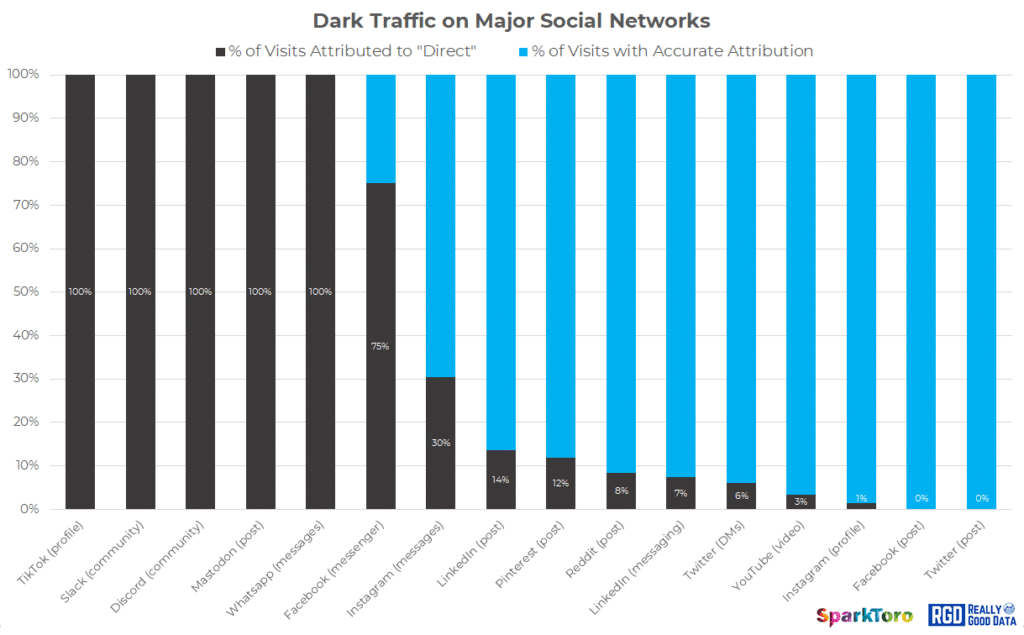
One theory is that this misclassification can lead marketers to overstate the impact of paid social campaigns, potentially shifting budgets away from organic strategies that are, in reality, performing well. This ties back to the complexities of attribution in today’s multi-touchpoint buyer journeys.
Marketers must look beyond traditional dashboards to fully understand how brand presence, referrals and word of mouth influence customer decisions. These hidden touchpoints play a critical role in shaping the buyer journey, even if they don’t show up neatly in analytics reports.
Big Tech companies and data privacy concerns in 2026
Data privacy has graduated from regulatory checkbox to core strategic imperative. Globally, about 79 % of the world’s population is covered by at least one data protection law, and over 140 countries now have privacy legislation on the books a tidal shift that influences every marketer’s playbook
This momentum isn’t just legislative. Consumers are feeling the issue personally: 82% of internet users worldwide report high concern about how their personal data is collected and used, and 60 % would spend more with companies they trust to handle their data responsibly.
Against that backdrop, Big Tech companies have dialled up their privacy commitments with very different flavours and implications for marketers.
Apple: Privacy as Product and Positioning
Apple’s privacy-first posture remains unmistakable. Its App Tracking Transparency (ATT) framework, first introduced in iOS 14, still shapes the ecosystem by forcing explicit opt-in for cross-app tracking. Regulators in Europe and beyond are now scrutinising ATT itself, with Poland’s antitrust authority investigating whether it unfairly disadvantages competitors in mobile advertising.
Independent assessments rank Apple highly on privacy policy transparency and user control, placing it at the top of privacy indices among major tech firms.
Yet there’s pushback. In 2025 Apple publicly warned that the EU’s Digital Markets Act could undermine privacy by forcing access to data it is designed not to collect, ironically highlighting how regulation can increase data exposure even as it aims to protect it.
And for marketers, that signals a clear reality: privacy controls like ATT are not merely features but competitive battlegrounds that affect user reach, measurement and even platform economics.
Google: Pivoting Privacy Without Abandoning Advertising
Google’s approach is more incremental and often technical. After years of planning to remove third-party cookies from Chrome — a move that would have fundamentally shifted web advertising — the company shelved that plan in 2025 and instead now gives users choice over cookie settings. (cookieyes.com)
The original Privacy Sandbox initiative — designed to replace third-party cookies with privacy-preserving APIs — was discontinued in late 2025. (Wikipedia)
That doesn’t mean cookies are suddenly safe forever — the industry trend remains clear. Browsers like Safari and Firefox have already blocked them outright, and even Google’s reprieve is framed around user control over tracking, not unrestrained data access. (matchbook)
Marketers should note that these shifts are not theoretical: a March 2025 Deloitte survey found only ~15 % of global marketers felt fully ready for a cookieless world and 69 % believe cookie deprecation will impact business more than privacy regulations like GDPR or CCPA. (buddymagazine.org)
What marketers can’t ignore
- ~82 % of internet users are highly concerned about how their data is collected or used. (Data Stack Hub)
- 60 % say they’d spend more with a company they trust on data privacy. (Data Stack Hub)
- Over 140 countries now have data protection laws in force. (Data Stack Hub)
- Only ~15 % of marketers feel prepared for post-cookie measurement realities. (buddymagazine.org)
What this means
- First-party data isn’t just nice — it’s essential. As cross-platform tracking becomes optional or restricted, owning your customer data through consented channels (CRM, email, logged-in experiences) is the closest thing to a stable foundation.
- Measurement needs to be rethought. With cookies optional and ATT opt-ins low in many segments, traditional attribution models are increasingly unreliable.
- Consumer trust is a competitive advantage. High concern about data use correlates with purchase decisions — treating privacy as a value-add, not a barrier, can differentiate your brand.
- Regulation isn’t slowing — it’s diversifying. Expect privacy laws tied to AI governance, algorithmic accountability, and cross-border data flows — especially in markets like the EU and US. (Clifford Chance)
This isn’t the end of Big Tech data strategies — but it’s the beginning of a new era where privacy and performance must coexist, not compete.
Importance of collecting first-party data
When it comes to data, there are three key types:
- First-party data: Information you collect directly from your customers or users through your own channels or touchpoints.
- Second-party data: Data you obtain from another company or organisation.
- Third-party data: Data collected by external entities not directly tied to your business.
With privacy regulations tightening and the decline of third-party data, collecting first-party data has never been more crucial for your marketing.
Investing in a solid CRM is one of the smartest moves you can make. A clean, well-maintained database not only helps future-proof your business but also provides a solid foundation for your marketing efforts. With a legitimate, up-to-date contact list, you can run effective email marketing campaigns and feed your first-party data into ad platforms like Google, Facebook and LinkedIn to target warm audiences. This keeps your brand in front of potential buyers, even if some contacts unsubscribe from emails.
No one channel to rule them all
If you’re expecting a single ad or channel to instantly deliver a flood of quality leads or sales, it’s time to rethink your approach.
There's no shortcut or magic formula for transforming your digital strategy overnight. Success comes from using the right mix of channels that align with how your prospects move through their buyer journey. For most businesses, that means combining organic search, paid search, social, email marketing and display.
Channels alone won’t guarantee success. Factors like your brand’s reputation, online reviews, public relations efforts, competitive pricing and customer sentiment all influence the effectiveness of your campaigns.
In 2026, an effective strategy is about balance. It’s not just about being present on every channel; it’s about delivering value and staying relevant wherever your audience is paying attention.
3. Businesses That Invest in Brand Make More Money
Chasing quick wins often leads businesses to focus heavily on performance-based activities aimed at bottom-of-funnel audiences. While these tactics can deliver short-term results, they miss a critical piece of the puzzle: building a strong brand.
Brand-building activities play a vital role in introducing people to your business and nurturing them through the early and middle stages of their buyer journey. Aligning your marketing strategy with how real-world buyers behave building awareness before pushing conversion leads to more sustainable growth.
The general rule of thumb is to allocate 60% of your marketing budget to brand-building and 40% to performance or activation activities. While this split may vary depending on your industry and customer lifecycle, the principle remains: neglecting your brand is a costly mistake.
Investing in your brand isn’t just about visibility it’s about future-proofing your business and creating a foundation for long-term success.
Long-term vs short-term marketing
Binet and Field’s influential study, The Long and the Short of It, underscores the importance of balancing brand-building activities with performance marketing. Their research highlights two distinct types of marketing long-term and short-term and how both are essential for sustainable success.
Long-term marketing focuses on building strong, lasting connections between your brand and potential buyers for future purchases. This is often referred to as brand marketing or “the long of it”. Examples include a SaaS finance leader speaking at a conference for CFOs, Commonwealth Bank sponsoring grassroots sports, hosting industry webinars for your target audience or winning prestigious industry awards. These activities create trust and recognition, positioning your brand as a market leader over time.
Short-term marketing, by contrast, aims to drive immediate action and is commonly known as performance marketing, demand generation, or ‘the short of it’. Its goal is quick conversions with calls-to-action like ‘visit our website’, ‘book a test drive’, or ‘download our demo’. These tactics deliver fast results, but they don’t build the deeper connections required for long-term growth.
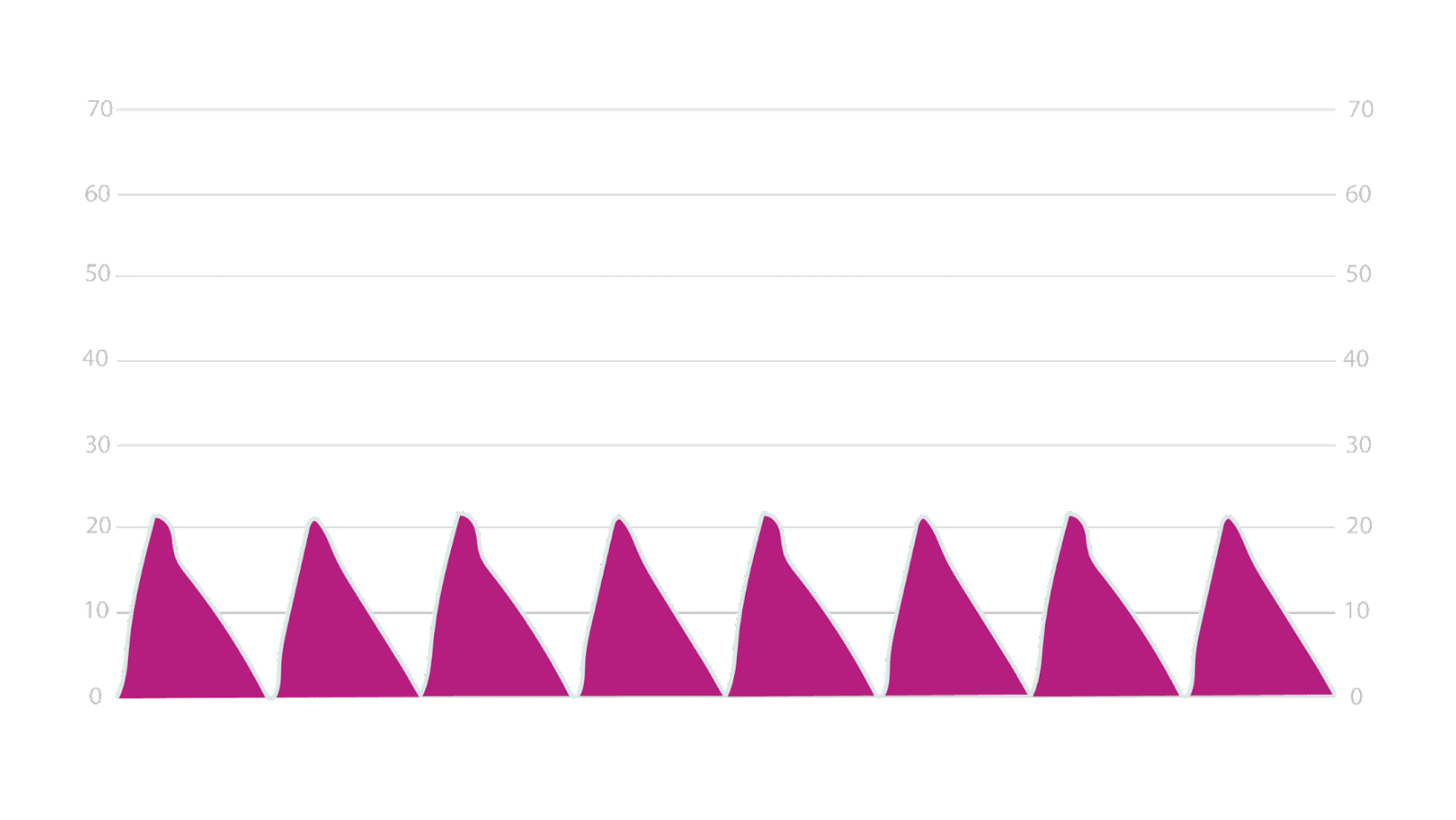
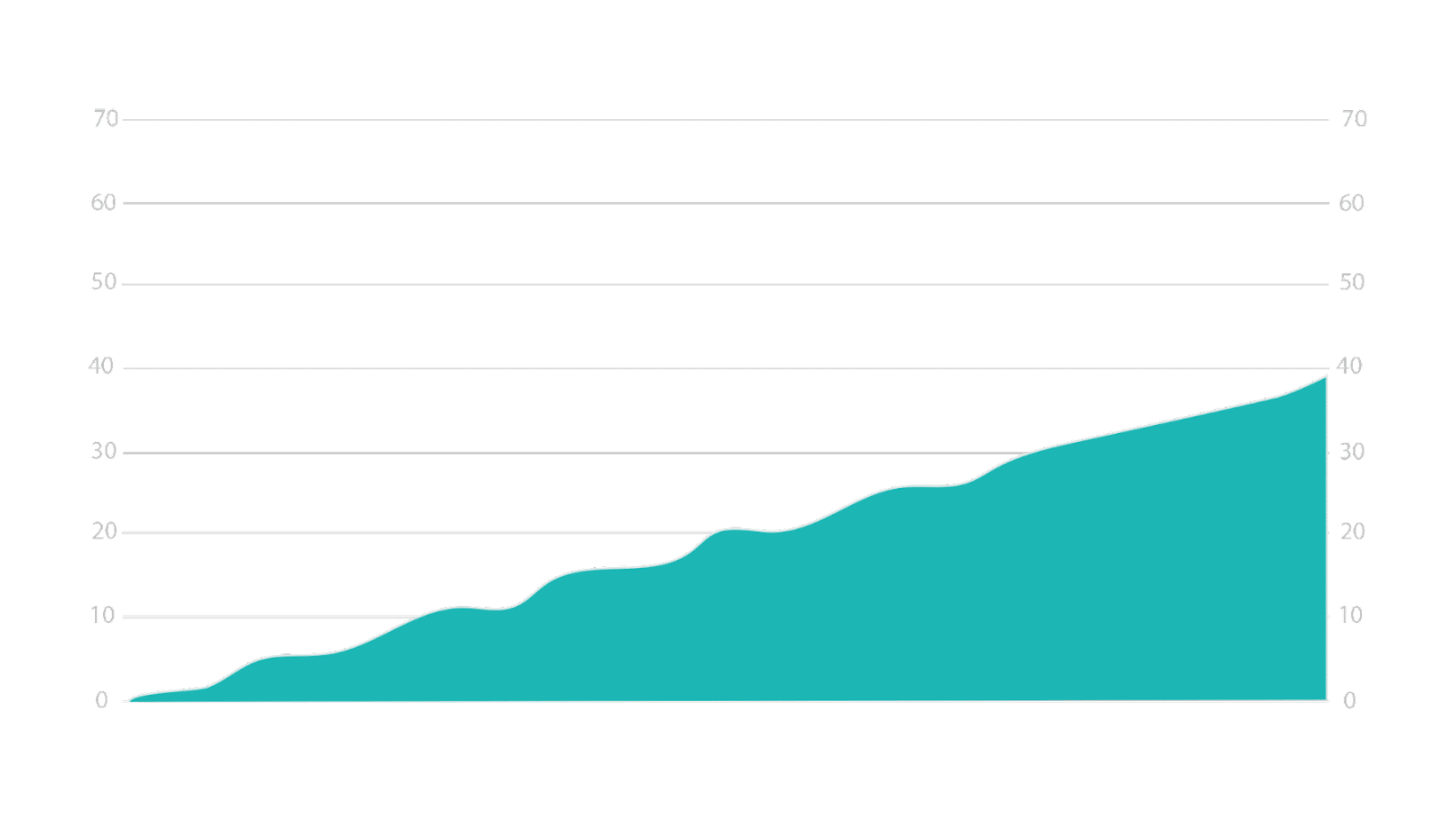
The challenge with short-term focus alone is its temporary impact. Sales may spike when campaigns run but drop just as quickly when budgets tighten or activity stops. Long-term strategies, however, drive consistent, sustainable growth. They ensure your brand is recognised, trusted and resilient against economic or environmental shifts. A well-executed balance between both approaches strengthens your business providing both immediate wins and a solid foundation for the future.
Short-term impact on profit
Long-term impact on profit
Combined activities' effect of short-term and long-term marketing on profit:

The 95/5 rule
The 60/40 split between brand-building and performance activities makes sense when you consider a key truth: 95% of your target audience isn't ready to buy right now.
That leaves only 5% of the market actively looking for your product or service and that small segment is shared among all of your competitors. If you wait until your audience is in-market, and they’ve never heard of you, the odds of converting them are slim especially for high-consideration purchases.
This is why long-term brand-building is so crucial. BMW doesn’t just market to people who can afford their cars today they invest in creating brand recognition with 20-year-olds who might buy a BMW in five or ten years. Similarly, XERO pours resources into content marketing to establish trust and authority with future business owners.
If your budget is focused solely on that 5% of in-market buyers, you're stuck chasing immediate wins at the expense of future growth. Worse still, you risk falling behind competitors who are playing the long game. By investing in the 95%, you create awareness, build credibility and ensure that when people are ready to buy, your brand is top of mind.
If you want to know more about how to make the right decision for balancing long and short term marketing, read our article: Unlocking ROI in Paid Search | When to Invest in Brand Campaigns
Good content marketing = Great leads and sales
To make 2026 your strongest year yet, you need a strategy that nurtures the 95% of the market who aren’t ready to buy right now.
Most of these people don’t know your business exists, let alone how your solutions could add value to their lives or businesses. They won’t respond to search ads, and they’re unlikely to engage with your paid social or display ads.
The best way to connect with these top and middle-of-funnel audiences is implementing a well-thought out content marketing strategy that provides genuine value.
What Is Content Marketing?
Content marketing is about creating and sharing valuable, relevant and consistent content to attract and retain your audience. Whether it’s videos, blogs, eBooks, webinars, podcasts or emails the goal is to become a trusted authority in your industry. When your audience is ready to buy, they’ll think of you first.
Key points for a strong content strategy:
- Understand your audience. Know your target personas and their pain points. The more specific your insights, the better your content will resonate. Solve real problems. Create content that addresses timely, relevant issues your audience faces.
- Build your database. Use gated content like downloadable ebooks or webinar sign-ups to collect email addresses and grow your CRM. Diversify your formats. Not everyone learns the same way. Offer a mix of blogs, webinars, podcasts, video and more so people can engage in ways that work for them.
- Repurpose and reuse. Maximise the lifespan of your content. For example:
- Turn an ebook into a blog series
- Share key blog points in an email campaign
- Edit video snippets into bite-sized content for social media
From average to exceptional content
The internet is flooded with generic, surface-level content. Audiences are drawn to businesses that go deeper—sharing useful, insightful information that genuinely addresses their needs. By investing in quality over quantity, you can set yourself apart as a reliable and trusted source.
The Hollywood vs Newspaper Approach
A smart way to ensure quality and save time is by reusing high-performing content. Take your most successful pieces, update them for today and re-publish them as evergreen content. This is known as the Hollywood approach timeless blockbusters versus the fleeting relevance of a newspaper.
By prioritising thoughtful, audience-driven content marketing, you’ll not only build trust but also stay top of mind for when your audience is ready to act.
Marrying brand with actionable digital marketing
You don’t need to overhaul your entire brand to make meaningful changes to your digital marketing strategy. In fact, there’s plenty of scope to incorporate low-budget, high-return brand-based campaigns that can run ’always-on’.
Examples include value-driven display retargeting campaigns via the Google Display Network targeting past website visitors or brand-focused Google Ads campaigns.
One long standing debate is whether paying for brand search ads is worthwhile. At Rocket, we consistently see strong results from brand campaigns and here’s why they work:
- Message control. Ads allow you to craft a tailored message, unlike the static and often generic organic listings.Targeted landing pages. You can direct searchers to specific landing pages that align with their intent.
- Competitor advantage. Ads ensure you stay at the top of the search engine results page (SERP) even when competitors are bidding on your brand.
- Enhanced visibility. Paid ads work alongside organic results to give your business more presence on the SERP, especially on mobile).
Both anecdotal evidence and our own tests reveal that turning off branded search ads doesn’t result in sufficient organic uplift to cover the revenue lost. In most cases, the combined savings and organic gains don’t match the value delivered by brand campaigns.
A fresh approach to your 2026 marketing budget
When reviewing your 2026 budget, take a close look at how you’re allocating funds across brand campaigns and bottom-of-the-funnel activities. Brand campaigns are typically more cost-effective and deliver a higher ROI. However, lower-funnel campaigns play a crucial role in bringing in new prospects into your ecosystem many of whom will eventually search for your brand.
For the best results, run both types of campaigns simultaneously. Brand-focused ads will build recognition and trust, while performance-driven campaigns will introduce your offering to new audiences. Together, they create a balanced strategy for sustainable growth.
4. Use AI intelligently
By now, AI is embedded across most marketing workflows.
It’s in the tools we use every day, from Google Ads and HubSpot to analytics platforms, CRM systems and creative tools. For most teams, the question is no longer whether to use AI. It’s how to use it well. The biggest gains from AI rarely come from replacing work entirely. They come from accelerating thinking, improving decision-making and increasing the number of ideas teams can test.
Marketers who use AI effectively tend to use it in three ways.
- First, as a research accelerator: AI can quickly surface patterns, summarise complex information, explore topic angles, analyse competitors or generate hypotheses worth testing. Instead of starting from a blank page, marketers can start from a structured point of view.
- Second, as a creative sparring partner: Used properly, AI can help pressure-test messaging, explore alternative positioning, generate creative directions or refine campaign ideas. It expands the range of concepts teams can explore before committing budget or production time.
- Third, as an operational efficiency tool: AI can dramatically speed up tasks like reporting summaries, data interpretation, draft copy creation, tagging and categorisation, campaign analysis and workflow automation. This frees marketers to spend more time on strategy, experimentation and creative thinking.
However, many teams still underuse AI because they treat it like a shortcut rather than a collaborator. Simply generating content or answers is rarely where the real value lies. The strongest results usually come from iterating with AI, asking better questions, refining prompts and using it to challenge assumptions.
The mindset shift is important.
Instead of asking “What can AI do for me?” the better question is: “How can AI help me think faster, test more ideas and make better decisions?”
AI-Driven design sparking creativity
AI-driven design tools such as Midjourney, Jasper and even Canva have opened up new opportunities for designers and businesses alike, to spark creativity and complete design tasks quicker and more efficiently. Design automation can reduce time on tedious and often repetitive tasks by automating image classification, colour palette selection and layout generation, meaning that designers can spend more time on the creative/strategic aspects of their work rather than the technical details.
Design algorithms are also a fantastic tool to spark inspiration by providing a template/sample of creative concepts. There are multiple tools/software platforms online that can generate logos, website layouts, social posts, slide decks or other creative designs. This is a convenient and often time-efficient solution for completing basic designs where you don’t want to put too much energy/focus, or you are trying to minimise a lengthy concept creation process.
Smart ways to use AI in marketing
Still on the fence about AI? The best way to guage its potential is to experiment. Set aside time to explore different tools, test responses and see how they fit into your workflow.
Plenty of resources exist on writing effective prompts, but here are some great AI use cases to get started:
- Managing budget pacing
- Creating organic social calendars
- Finding design inspiration
- Refining ad copy
- conducting top-level competitor research
- Generating content ideas for blogs, podcasts or webinars. Editing for tone, continuity and accuracyWriting schema mark-up scripts
- Keyword analysis and ideation
Don’t leave everything to automation
In 2026, the push for automation in marketing will only grow, with platforms like Google and Meta expanding their offerings. Marketers, however, must still know when human intuition trumps automation. While automation streamline tasks, it can’t replicate the subtle nuances of audience connection.
Tailored audience segmentation is essential, and businesses that neglect it may fall behind. Marketing automation is crucial, but only when used strategically to complement human insights. Without it, your brand risks being left in the dust.
TASK:
Review all tasks you complete within a week, and consider which low-effort or time-consuming activities could benefit from AI assistance. Once you have found a rhythm and a brief that works for you, turn this into a template that you can edit and tweak for future tasks.
Chapter 2: Everything You Need to Know About the Best-Performing Digital Marketing Channels of 2026
What’s Working in Google Ads, SEO, Paid Social, Email Marketing, Video and AI Right Now
The Most Important Google Ads Updates for 2026
Google Ads is changing fast. Automation is doing more of the heavy lifting, and the way consumers discover brands is shifting. If you’re running ads, you can’t rely on the same tactics that might have worked a few years ago.
In 2026, it’s all about sharper creative, smarter use of your own data and stricter privacy rules. Here’s what it means for your campaigns.
Demand Gen campaigns offer full-funnel visibility across high-engagement platforms
Google wants brands to reach people before they search. That’s where Demand Gen campaigns come in. Instead of targeting people who are already typing queries into Google, Demand Gen shows image and video ads to users while they’re browsing content across YouTube, YouTube Shorts, Discover and Gmail. Where search campaigns were built to capture demand, Demand Gen campaigns build demand.
What makes Demand Gen campaigns different?
- Focuses on visuals first: Demand Gen relies on strong creative; videos, images, carousels; rather than text-based search ads.
- Reaches people earlier in the journey: Your ads appear while users are watching videos or scrolling feeds, not just when they’re actively searching.
- Google’s AI optimises delivery: You provide creative assets and audience signals (like first-party data or lookalikes), and Google’s system decides where and who sees the ads.
- Supports product feeds: eCommerce brands can showcase relevant products to the right users at the right time based on user behaviour.
- Useful when: You’re launching a new product, growing brand awareness, expanding into new markets, supporting existing Search or Performance Max campaigns or marketing to B2B audiences with longer buying cycles.
By making visual placements more prominent and pushing engaging ads earlier in the customer journey, Demand Gen creates interest now instead of waiting for someone to search. This year, brands should fully capitalise on visually rich formats like short-form videos and feed-based browsing, where modern audiences are already spending most of their time.
You can now update Dynamic Search Ads and Google Display Ads to Performance Max
Google now lets you upgrade your Dynamic Search Ads (DSAs) to Performance Max (PMax). PMax runs your ads across Search, Display, YouTube, Gmail and Maps in one campaign. It uses automation to decide where to show ads and who to show them to.
Benefits of upgrading to PMax
- Integrated campaigns – leverage AI to run across multiple channels at once for a better return on investment.
- Improved conversions – Google indicates that conversions have gone up by more than 15% (results vary).
- Inventory-aware ads – automatically removes out-of-stock products for eCommerce brands.
- Greater text control – offers flexibility in editing ad headlines.
- Broader reach – engages audiences across more Google platforms without the need for separate campaigns.
Drawbacks of upgrading to PMax
- Limited reporting – reporting isn’t always detailed and transparency is still evolving.
- Reduced keyword control – you have less control over keywords and targeting of specific audiences.
- Loss of copy control – relies on AI instead of website-specific messaging.
- Potential imbalance – Google’s system decides which messages and audiences get priority.
For some businesses, PMax will offer advanced tools, but the tradeoff is control and transparency. The choice depends on your campaign needs and goals, and how much oversight you want.
Enhanced privacy measures with Consent Mode V2
Google Consent Mode V2 is the current, privacy-forward framework that lets websites communicate user consent preferences to Google’s advertising and analytics systems so tags behave accordingly.
It’s designed to help brands balance data collection and privacy compliance, especially under regulations like the GDPR, ePrivacy and the Digital Markets Act, without completely losing measurement when users decline cookies. Some important features:
- New consent parameters
In addition to the existing ad_storage and analytics_storage parameters, Consent Mode V2 introduces ad_user_data and ad_personalisation. This lets you have more precise control over how you use personalised ads and advertising data, ensuring that you respect what users want.
- Compliance with privacy regulations
Consent Mode V2 aligns with stricter privacy norms, particularly within the European Economic Area (EEA).
As privacy measures evolve, you will need to innovate privacy-compliant ways to target audiences and measure campaign performance.
Looking across 2026, Google Ads will move even further into automation, driving digital marketers to focus less on manual optimisation and more on strategy, creative direction and first-party data strength. AI-driven campaign types, predictive bidding and asset-level optimisation are now standard. Platforms also stress that clean signals and high-quality data are key to success. As marketers guide automated systems towards useful results, strategic oversight and creative input remain essential. Measurement has also evolved: tools like GA4 and data-driven attribution models empower deeper understanding of multi-touch journeys and cross-platform performance.
Those who will do well aren’t the ones who fight automation and machine insights. They're the ones who use it wisely, feed it strong inputs and apply human interpretation where it matters most. These tools are powerful, but they’re not infallible. Applying discretion, sense-checking outputs and knowing when to step in is what separates average results from strong ones.
ACTIVITY:
Take a moment to evaluate your current campaigns or tools:
- Are your ad creatives optimised for visual engagement on YouTube Shorts or Discover?
- How ready is your team for AI-driven Performance Max upgrades?
- Have you implemented Consent Mode V2 to ensure privacy compliance?

Using Social Media Ads to Your Advantage in 2026
In social media advertising, AI now dictates much of what happens behind the scenes on platforms like Meta, TikTok, LinkedIn and Pinterest. Marketers aren’t fiddling with campaigns like they used to. Now, they are taking the lead and allowing automation to manage the bidding, targeting and placement optimisation.
While AI makes campaigns more efficient, competition intensifies as barriers to entry lower. Strong creative, differentiated positioning and well-managed first-party data matter more than ever. Success depends on feeding platforms high-quality signals, testing modular creative at scale and staying agile as formats, algorithms and privacy rules continue to evolve.
What Meta has been up to
Meta’s Advantage+ suite continues to transform how advertising performs on platforms like Facebook and Instagram.
AI-powered campaign automation
Advantage+ takes care of a lot of the work that goes into setting up and optimising campaigns. Using Meta's Andromeda AI, the system can improve audience delivery, bidding strategies and creative combinations in real time. This lets marketers focus on strategy and creative direction rather than manual tasks.
Smarter audience expansion
One of the biggest changes in 2026 is how Advantage+ Audience treats targeting inputs as suggestions rather than hard restrictions. This enables Meta’s AI to find additional high-potential users outside of set parameters, aiding brands in expanding their reach.
Enhanced creative optimisation and performance
Meta’s AI automatically generates and tests multiple ad variations, matching creative assets to placements and user preferences. Advertisers adopting AI recommendations like Opportunity Score have seen reductions in cost per result, while the suite continues to expand relevance and make placements more engaging.
Improved ROI outcomes
Advertisers using Meta’s AI-enabled Advantage+ products are generating a stronger return on ad spend, with measurable improvements in revenue per dollar spent and lower cost per action in many cases.
Looking ahead
Meta is moving towards even greater automation. Brands will be able to launch fully AI-generated campaigns, where a simple product image and budget are all the platform needs to come up with ad creative, targeting and budget recommendations.
What this means for you
As AI continues to reshape digital advertising, tools like Meta’s Advantage+ are becoming a core part of campaign strategy rather than an optional add-on. They can streamline setup, optimisation and delivery, helping advertisers scale performance more efficiently.
That said, these tools are not set-and-forget.
While AI-generated creative and automated enhancements can improve performance, they are still evolving. In some cases, outputs may lack polish or fall short of brand guidelines. Not every recommendation will suit every business, so these features should be applied selectively, not automatically.
There are also important considerations to keep in mind. Audience expansion can extend reach, but without the right controls in place, it can dilute targeting. Location settings and campaign structure remain critical to ensure your budget is being spent in the right places and reaching the right people.
The role of AI is to support better decision-making, not replace it. The strongest results come from combining AI-driven tools with thoughtful creative direction and ongoing human oversight.
In practice, that means using automation where it adds value, while maintaining control over the elements that matter most. This balance allows campaigns to stay aligned with your goals, your audience and your brand.
TikTok’s evolving targeting solutions
TikTok continues to strengthen its targeting and automation capabilities, with many of its AI-powered features available to Australian advertisers through TikTok Ads Manager.
Smart+ campaigns
TikTok’s Smart+ campaigns use AI to improve how ads are delivered, who they’re shown to and how budgets are spent. Advertisers no longer have to manually define narrow segments. Instead, they can provide TikTok's system with high-quality creative and conversion signals so that they can identify and prioritise users who are most likely to take action.
Custom and lookalike audiences
Australian advertisers can build Custom Audiences using website traffic, app activity, customer lists and engagement data. Lookalike Audiences then allow you to expand reach by targeting users who behave similarly to your highest-value customers.
Event-based optimisation
Through TikTok Pixel and Events API integration, advertisers can optimise campaigns around specific conversion events such as purchases, leads or add-to-cart actions. Strong first-party data signals significantly improve performance.
Interest and behaviour targeting
While TikTok increasingly encourages broader targeting for AI optimisation, advertisers can still layer interest categories, in-market behaviours and demographic filters to guide delivery where necessary.
Creative and signal integration
TikTok’s algorithm heavily weighs engagement signals such as watch time and interaction. Feeding the platform strong creative variations and consistent event tracking allows the AI to refine targeting over time.
What these changes mean for Australian Marketers
TikTok’s new tools indicate that micromanaging is out. What matters is providing the algorithm with strong inputs. With Custom and Lookalike Audiences, Smart+ automation and event-based optimisation powered by Pixel and Events API, performance now hinges on high-quality creative and clean first-party data.
Rather than narrowing audiences too tightly, marketers should focus on strategic signal setup, consistent tracking, clear brand direction and developing scroll-stopping content — allowing TikTok’s AI to do what it does best.
How Symphony AI is transforming TikTok ad creative
Following its global rollout, TikTok’s Symphony Creative Studio has evolved into a central part of the platform’s AI-powered advertising ecosystem. The tool is designed so brands, creators and agencies can produce scalable, TikTok-native creative more efficiently, directly within the app’s Ads Manager.
AI-powered video generation
Advertisers can produce videos that are ready for TikTok in just a few minutes by entering product URLs, images, scripts or simple text prompts. The AI produces multiple creative variations with native layouts, captions and hooks that are in line with platform trends. This feature makes it easier to quickly test and adjust aspects.
Digital avatars
Symphony offers stock AI avatars with licensed actors in a range of languages, as well as digital presenters that can be customised to replicate a brand’s spokesperson. These avatars can read scripts for advertisements, product showcases or explainer videos.
Translation and multilingual dubbing
The platform lets brands translate and voice dub their creative work automatically, alleviating the need to reshoot again for different markets. This supports international expansion and cross-region campaign scaling.
Integration within TikTok Ads Manager
Symphony Creative Studio is embedded directly into TikTok’s ad workflow, allowing assets to move seamlessly from generation to deployment and optimisation.
Reali-TEA, Curiosity Detours and Emotional ROI
In 2026, TikTok is spotlighting Reali-TEA as one of three major trend signals, alongside Curiosity Detours and Emotional ROI. These trends reflect a broader shift away from overly polished or escapist content to authentic, honest and cultural storytelling.
What this means for you
TikTok is an AI-accelerated creative playground. With Symphony Creative Studio embedded directly in Ads Manager, brands can pump out TikTok-ready videos, digital avatars and multilingual variations in minutes. However, speed and volume aren’t the biggest issues anymore. Standing out is. As more brands use AI to produce content, gains will hinge on authenticity and emotional resonance. TikTok’s 2026 trend signals highlight how audiences are drawn to realistic experiences, behind-the-scenes moments and grounded content. The brands that rise above? They’ll be the ones using AI to elevate production but never let go of that human spark.
If you’re curious about whether building a presence on TikTok is the right move for you this year, check out our article: Should Your Business Invest in TikTok Ads to Boost Visibility?

LinkedIn Ads updates
As competition for professional attention intensifies, LinkedIn Ads is introducing smarter automation, deeper insights and richer formats to help marketers drive measurable business outcomes.
Smarter campaign tools and analytics
LinkedIn continues to enhance its Campaign Manager, adding AI-driven tools like predictive Media Planner forecasts and detailed performance dashboards that help advertisers plan and refine campaigns before launch. To make life easier, you can duplicate ads with a few clicks, generate dynamic UTMs and finally get performance data that actually makes sense.
Putting video creativity first
LinkedIn is quickly adding videos and creative options, and marketers are seeing the results with greater audience interaction. LinkedIn has introduced a more immersive video experience, including a personalised ‘Videos For You’ feed within the main timeline and a full-screen mobile viewing mode for deeper engagement. Integrating with CapCut streamlines the creation process, enabling users to edit videos and publish them directly to LinkedIn with ease. ‘Full-Screen Video Model’ also allows users to open videos in an immersive full-screen player.
Emphasis on data and lead quality
LinkedIn’s advertising ecosystem continues to prioritise high-quality leads and professional audience targeting, leveraging detailed LinkedIn profile data (job title, seniority, company size, industry) to deliver more relevant ad experiences and better ROI for B2B campaigns.
Professional context and trend signals
LinkedIn is doing more than just ads. Trends on platforms show a broader move towards AI-driven distribution, algorithmic relevance and professional expertise content. Ads will become more common as part of a larger focus on trust, meaningful interaction and professional identity within the network.

How Pinterest is shaping the future of visual commerce
With predictive trend data, enhanced AI personalisation and deeper shopping integrations, Pinterest is strengthening its position as a high-intent platform for brands looking to convert inspiration into action.
Continued trend forecasting with Pinterest Predicts™
Pinterest’s annual Pinterest Predicts™ report for 2026 identifies 21 major consumer trends based on billions of search and save signals, giving marketers a predictive view of what audiences will be interested in before trends hit the mainstream. Because Pinterest trends often predict broader cultural behaviours, aligning ad creative and product showcases with these emerging patterns can drive stronger engagement and conversion.
Longer-lasting discovery and strategic creative
Unlike platforms driven by short-lived viral content, Pinterest emphasises longer trend lifecycles and intentional discovery, meaning pins and trend-aligned creative can continue to perform and influence behaviours long after posting.
Strong focus on AI and consumer signals
Pinterest is increasingly investing in AI technologies, including tools like Pinterest Assistant and AI-powered shopping experiences that personalise recommendations. Gen AI labels are also helping to identify AI-generated content, ensuring users can distinguish synthetic media from human-created material, building greater trust in the platform.
Evolving ad tools and visual search
Pinterest has introduced Top of Search ads, a new premium placement that places brands prominently at the top of search results, capturing high-intent users at the moment they’re actively looking for ideas or products. Alongside this, Pinterest rolled out new advertising tools designed to improve campaign visibility, measurement and performance optimisation, helping marketers better reach users in discovery mode and fuelling stronger outcomes across the platform. Pinterest also continues building out AI-driven visual discovery features and ad solutions for brands to reach users in discovery-oriented contexts.
Snapchat’s next era: smarter ads and deeper engagement
With expanded AI tools, enhanced AR (augmented reality) capabilities and native-first ad formats, Snapchat is evolving into a high-performance platform built for attention, interaction and measurable impact.
AI-powered performance and creative tools
Snapchat is concentrating on improving its advertising products with AI. The platform’s roadmap includes expanding AI-driven campaign automation with Smart Campaign Solutions and machine-learning-based targeting that selects the best combinations of images, videos and text to improve campaign performance with less manual intervention. These tools aim to make ad creation and optimisation smarter and more intuitive for brands of all sizes.
Enhanced AR and native ad experiences
Snapchat continues to build on its immersive ad formats. Augmented reality and native campaigns are now easier to access and use, with AI features in Lens Studio AI for custom AR experiences. Sponsored Snaps are getting an upgrade too, with more native ad solutions that fit naturally with how Snapchatters already use the app. There are also innovations like Reminder Ads that let users set timely notifications directly from an ad.
Gen Z engagement and immersive formats
Snapchat’s popularity remains particularly strong. The app’s visual stories, playful filters and interactive ad formats really click with Gen Z and younger Millennials. Brands are using short-form video, hyper-personalised filters and live engagement to cut through the clutter and build authentic connections with an audience who usually tunes ads out.
The evolving role of AI and human creativity
Industry commentary suggests that while Snapchat’s AI capabilities will accelerate planning, creative production and optimisation, the most effective marketing will balance automation with genuine, human-centred communication. Marketers are experimenting with more conversational and culturally resonant formats that feel like sincere interactions rather than generic advertising
Poll Question
Which of these platforms do you believe will have the biggest impact on your social media ad strategy in 2026?
Meta (Advantage+ tools)
TikTok (Smart Campaigns, Audiences)
LinkedIn (Campaign manager, Immersive videos)
Pinterest (AI, Top of Search ads)
Snapchat (Smart Campaign Solutions)
All of the above
SEO Key Updates
Search in 2026 barely resembles the old blue-link days that marketers remember. Now, AI-generated answers, multimodal results, zero-click experiences and evolving trust signals have upended how people find and value content. SEO no longer solely focuses on ranking on the first page of Google, it’s about being visible wherever and however people search. As search patterns fragment across AI assistants, social platforms and traditional engines, brands must rethink what optimisation really means.
AI-driven search takes centre stage
With AI-generated answers like Google’s AI Overviews and similar tools dominating SERPs, users get what they need right on the page, no click required. It’s forcing SEO to evolve towards visibility within AI responses, not just traditional ranking positions.
Impact on digital marketers
Fewer clicks to websites: AI Overviews typically answer questions directly, so users never reach your site. This means zero-click searches are growing, while organic traffic may be on the decline.
Click-through rates (CTR) are dropping: When AI pulls out summaries, organic clicks can suffer, sometimes by more than 30–40% for informational queries. Marketers need to stop measuring success alone.
It’s about being visible, not just ranking: Because answers live right on the search page, brands need to optimise for mentions in AI Overviews and featured snippets, not just top organic spots.
Redefined SEO KPIs: With outbound traffic decreasing, marketers should broaden performance measures to include visibility in AI-generated results, impression share in SERP features and assisted conversions linked to exposure in AI summaries.
Greater emphasis on structured content: AI models are more likely to use content that is organised in clear, short formats, like FAQs or quick answers. This changes how content strategy is approached.
Need for diversified traffic strategies: With search driving fewer clicks, brands must invest more in multi-channel visibility, including social, video and AI-assistant platforms, to offset potential losses in direct site visits.
These shifts demonstrate that search optimisation in 2026 will be less about chasing the #1 spot and more about being part of the answer ecosystem, where users encounter knowledge directly.
Generative Engine Optimisation (GEO) and Answer-First SEO
Generative Engine Optimisation (GEO) marks a significant evolution of traditional SEO in response to the growing dominance of AI-driven search experiences. Unlike classic SEO, which focuses on improving a site’s ranking for specific keywords, GEO prioritises making content discoverable and usable by AI systems that generate answers directly. Examples of these include Google AI overviews, ChatGPT, Gemini and other generative platforms. This method involves shaping content so that AI can pull it out, combine it and cite it in its responses, rather than just appearing as a link that users click on.
As these generative search engines take over, getting noticed in AI answers is becoming the main path to discovery. For GEO purposes, content must be written in a way that is clear, authoritative and well-structured so that AI can easily understand it and use it in responses. Brands must consider not only what they write but also how they organise and present information, using concise answers, a semantic structure and direct language that aligns with how conversational AI queries are processed.
This serves as a crucial reminder for digital marketers. You can’t just track organic clicks. Instead, you need to monitor AI citations, see how often your content comes up in generative answers and keep track of how often AI models use your work. GEO is a more visible strategy that combines SEO with answer-centric optimisation.
E-E-A-T and authority signals become critical
Search engines are placing increasing emphasis on Experience, Expertise, Authoritativeness and Trustworthiness (E-E-A-T) when evaluating content quality. In an era dominated by AI-driven search features, E-E-A-T is Google’s framework for assessing whether content is reliable, credible and genuinely helpful to users. Strong E-E-A-T signals are linked with better visibility not only in traditional rankings but also in AI-generated summaries such as Google AI Overviews. Marketers who demonstrate genuine expertise and verifiable authority are most likely to be selected as sources for answers and citations.
This development also means that keyword optimisation alone is no longer sufficient. Search engines increasingly prioritise content that reflects first-hand experience, subject matter depth and trust, particularly for topics where accuracy matters (e.g., health, finance or professional advice). Pages that lack credible authorship, clear credentials or a reputation backed by external references are at risk of being overshadowed by competitors that signal stronger E-E-A-T.
In practical terms, building E-E-A-T involves deliberate strategy: showcasing real author expertise, citing reputable sources, securing high-quality backlinks and maintaining transparent, accurate information. Content that aligns with these quality markers is more likely to be trusted by both search engines and users, increasing its chances of appearing in AI assistant responses, featured snippets and core results. As search becomes more conversational and answer-centric, strong authority signals are crucial in maintaining visibility and relevance.
How to Strengthen E-E-A-T in 2026
Show real authorship
Add detailed author bios with credentials, experience and LinkedIn profiles. Where relevant, highlight qualifications, certifications or industry roles.Demonstrate first-hand experience
Include case studies, original research, real examples, data insights and expert commentary rather than generic summaries.Cite credible sources
Reference trusted publications, academic research, official statistics and recognised industry bodies to reinforce trust signals.Earn authoritative backlinks
Focus on digital PR, thought leadership and partnerships that generate links from high-authority, relevant domains.Keep content accurate and updated
Regularly review and refresh key pages, especially topics like finance, legal and health.Use structured data
Implement schema markup for authors, organisations, FAQs and articles to help search engines better interpret credibility signals.Build brand reputation
Encourage reviews, mentions in the media and consistent branding across all platforms. Strong off-site signals support perceived authority.
Avoid over-automation
AI can assist production, but human oversight, fact-checking and subject-matter expertise are essential to maintaining trust.
Search everywhere optimisation and multimodal discovery
Search is no longer confined to typing keywords into a single engine and clicking through a list of links. We are discovering information across multiple surfaces, including traditional search engines like Google, social platforms, AI assistants, voice interfaces, video feeds and ecommerce search, requiring what experts call ‘Search Everywhere Optimisation’. This approach recognises that users switch between platforms such as TikTok, YouTube and Reddit and generative AI tools (ChatGPT and AI Mode) significantly impact decision-making and brand visibility. Marketers must ensure content is discoverable wherever intent exists, not just on the one channel.
Multimodal search is how people use text, voice commands, images and videos in combination to find answers. Content optimisation across multiple input types is essential, as modern search engines and AI platforms now interpret queries that blend these formats. For example, users might take a photo of a product and ask an AI for purchase options or use voice search to request local recommendations. In these situations, regular web pages won't be enough to get attention. Metrics and optimisation strategies go beyond page rankings to include how well a site shows up in image searches, video searches, voice responses and conversational AI results.
This evolution signals that digital marketers need to make sure that their SEO strategies cover all potential discovery points and content formats. Brands shouldn’t just write long pages for Google. Digital marketers require structured metadata, rich video and image assets, voice-friendly content and AI-ready responses that generative systems can quote or cite. Building out visibility improves the chances that content will surface wherever users are searching, making Search Everywhere Optimisation essential.
ACTIVITY:
2026 SEO Reality Check
The old search playbook doesn’t apply anymore. It’s about AI answers, zero clicks and being surfaced wherever attention lives. To see if your strategy is built for that, ask yourself…
AI & Zero-Click Search
Are you optimising to be quoted by AI, not just ranked?
Are your pages structured for summaries, snippets and overviews?
Are you tracking visibility — not just traffic?
Generative Engine Optimisation (GEO)
Can AI easily extract and cite your content?
Are you answering real questions clearly and directly?
Is your brand showing up in AI-driven responses?
E-E-A-T and Trust Signals
Do you prove real expertise and experience?
Are you publishing original insights — not generic content?
Is human strategy guiding your AI tools?
Search Everywhere
Are you visible across Google, YouTube, TikTok, AI chat and voice?
Are you optimising video, images and structured data — not just blogs?
The Big Question
If clicks keep shrinking, does your visibility strategy still work?
Video is Increasingly Central to Discovery and Performance
Video has become a primary discovery format across digital platforms. Social feeds prioritise it, audiences expect it and advertising products are increasingly built around it.
From short-form social content to shoppable placements, video supports awareness, consideration and conversion. Treating it as an optional format rather than a core channel risks reduced visibility in algorithm-driven environments.
Scroll first, search later
Instead of text-based search, discover now often begins with video. Users are already scrolling through entertainment platforms like TikTok, YouTube and Instagram for product exploration, recommendations and brand storytelling. Immersive videos are the first point of contact in the customer journey for industries like retail, travel and tech. Short vertical videos work so well because they fit how we use our phones. It's quick, easy to watch and really built for fast decision-making. Social platforms clearly favour videos that hold attention, giving well-crafted creative more space and reach than static posts.
From an advertising perspective, video is writing itself into every stage of the marketing funnel. Brands are using product demos, short explainers and retargeting videos to drive clicks, leads and purchases. This is especially true when platforms use AI to match creative assets with specific audiences and placements. Meta, TikTok and YouTube all use engagement signals from videos to automatically improve their performance and lower their costs.
Creative quality has a direct effect on results, and brands that don't use video first risk losing visibility and relevance.
Big ideas, faster video production
Previously, video production required large budgets and long timelines. Today, teams widely use AI tools for corporate videos, explainers and social ads. With the help of AI, brands can now build simple videos, edit content faster, generate voiceovers and create variations all from text prompts.
With text-to-video generation, video production is no longer a slow, expensive process. Instead of waiting weeks to shoot, teams can improve and polish content in just a few days.
AI is also driving personalisation and optimisation at scale. Tools now let you make realistic AI avatars, localise videos and edit features in real time to make them more appealing to certain audiences, helping brands connect with viewers on a larger scale.
We can anticipate that a growing share of marketing videos will be AI-generated or at least made with the help of AI.
Engagement is the new currency
Interactivity isn’t just a nice extra anymore — it's right at the heart of things. Shoppable videos, clickable calls to action and even livestream commerce, they all blend inspiration and action in a way that didn’t exist a few years ago. Video is no longer just a tool for brands to gain attention. They want results that they can measure: purchases, leads and app downloads. Everything ties back to business goals. Completion rates, likes, shares, replays, conversions – these metrics power both the way platforms serve content and how advertisers judge what’s working.
User-generated content (UGC) and influencer videos have taken over as the go-to approach for video marketing. Audiences trust real creators more than glossy brand ads, and marketers have picked up on this. Because platforms like TikTok and Instagram deliver authentic, casual videos that feel like they belong in your feed, they’re building creator partnerships right into their performance strategies and treating influencers as partners, not just paid mouthpieces. Authentic voices aren’t just a bonus — they’re what encourage people to watch, engage and actually buy. We’ve seen that creative systems that blend professional production with authentic creator content deliver both in terms of reach and resonance.
Poll
What’s your video strategy for 2026?
With AI-powered creation, performance-driven formats and creator-led content reshaping digital advertising, how are you evolving your video approach?
Poll Question: Which video strategy will have the biggest impact in 2026?
- AI-assisted video creation and rapid creative testing
- Performance-focused short-form video (built to convert, not just engage)
- Shoppable and livestream video commerce
- UGC and influencer-led content for authenticity and trust
Email Marketing Updates
Bulk sends aren’t the strategy they used to be. Modern email marketing is about sending emails that feel timely and useful to each person. Brands can use smarter tools to figure out what subscribers are interested in, what they have bought before and how they respond to emails they’ve already received. Brands can use this information to customise not only the message content but also the optimal timing for its delivery.
When you combine such data with clean design and accessibility in mind, email emerges as one of the most reliable ways to build relationships and drive sales.
AI-powered personalisation goes mainstream
Adding a first name to a subject line is no longer enough personalisation. Email services with AI-driven personalisation can now use a person's engagement patterns. Businesses are designing automated sequences that respond to real actions. Someone who leaves their cart might get a reminder with a special deal. AI can find high-value customers early on and automatically put them on loyalty or VIP journeys. AI can also analyse past purchases and browsing behaviour to recommend products a customer is statistically most likely to purchase next — not just ‘similar items’, but what the data suggests they'll seriously want.
One of the most noticeable effects of this evolution is the use of predictive send time optimisation and dynamic content blocks. Instead of picking a set time for everyone, systems can learn when each person is most likely to open an email and send it at that time instead. You can also change the subject lines and offers based on what subscribers have done lately. This makes the messages feel more relevant and less random.
Making the inbox click-worthy again
Interactive email experiences are reshaping how brands connect with subscribers. By turning static messages into dynamic, web-like interactions that live inside the inbox, brands can significantly increase engagement metrics and derive deeper insights into subscriber behaviour.
No more flat, boring messages — today’s brands can drop in interactive elements such as polls, quizzes, carousels and countdown timers inside the email. Recipients don’t have to click out to a website. They engage right there, which ramps up clicks and gives brands a better idea of what they care about. Fewer steps also usually means more interaction. For example, with product carousels, subscribers can swipe through a bunch of items without leaving their email. It’s quick and simple, moving someone from curiosity to checkout almost instantly.
In a world where there's a lot of competition for inbox space, marketers need to give people a reason to stay, click and interact with their content instead of just scrolling past it.
Goodbye blasts, hello smart journeys
In 2026, email marketing has moved well beyond generic blasts and into smart, AI-driven journey orchestration. Brands don’t have to send the same message to all their subscribers. They use machine learning to create lifecycle flows that respond based on real-time behaviour.
Automation powers this sophistication by continuously analysing behavioural signals such as cart abandonment, engagement dips and purchase frequency. Platforms can now trigger contextual campaigns at the best time, predict churn or lifetime value and adapt the message to fit. The outcome means more relevance, better retention and more sales, without piling work back on to marketers.
Built for mobile, made for everyone
The majority of people open emails on their phones, so designing for desktop first simply doesn’t cut it anymore. Everything — layout, copy, call-to-action buttons — should start with mobile in mind. That means single-column designs, larger tap targets, concise copy and fast-loading graphics optimised for smaller screens. Features such as dark mode, lightweight images and a clear hierarchy aren't just nice to have. They are the deciding factor if your email gets read or trashed in seconds.
Accessibility matters, too. It’s not just about checking a box for compliance. Emails need proper structure, alt text, enough contrast and readable fonts so everyone — especially those relying on screen readers or assistive technologies — can engage. Clear layouts and easy formatting have also proven to improve clicks and lift the way people see your brand.
On top of this, technologies like accelerated mobile pages (AMP) for email and advanced interactive elements are taking emails to another level. With AMP, subscribers can submit forms, browse live product carousels or book appointments without leaving an email. Together with interactive features and real-time content updates, emails feel more like mini-apps than newsletters.
The Latest in AI
AI is no longer a futuristic add-on in digital marketing — it’s embedded directly into the tools brands use every day. From ad creative generation and short-form video production to lifecycle automation and multi-touch attribution, the common thread across these platforms is intelligence at scale: faster creative iterations, smarter targeting, stronger retention and clearer performance insights. For marketers in 2026, the question isn’t whether to adopt AI tools — it’s which combination will deliver sustainable, measurable growth.
AI tools to watch out for
Try AdCreative.ai for AI-powered ad production
AdCreative.ai is built specifically for performance marketers who need high-converting ad creative at scale. Marketers don't have to start from scratch; they can quickly come up with a lot of creative variations that fit the goals, audiences and platforms of their campaigns.
Ways to use it
Generate high-converting ad creatives – input your brand details, offer and audience, and the platform produces ready-to-launch ad visuals and primary text designed to maximise click-through and conversion rates.
Performance-driven optimisation – use AI-generated creative scoring insights to predict which ads are most likely to perform before launch, reducing wasted spend.
Platform-ready resizing and formatting – automatically adapt creative for different placements and aspect ratios, including feed, stories and display formats.
AdCreative.ai is ideal for ecommerce brands, agencies and growth teams looking to scale creative production without dramatically increasing design resources.
Try TikTok Symphony Creative Studio
TikTok’s Symphony Creative Studio is the platform’s AI-powered creative engine. It’s built directly into TikTok Ads Manager to help brands produce TikTok-native content at scale.
Rather than repurposing traditional ad creatives, Symphony focuses on creating content that reflects TikTok’s style, trends and user behaviour.
Ways to use it
AI-powered video generation – input a product URL, images, key selling points or a short brief, and Symphony generates TikTok-ready videos complete with captions, hooks and formatting aligned to current platform trends.
Digital avatars and AI presenters – create videos featuring licensed stock avatars or customised brand representatives.
Automated translation and dubbing – localise video creative into multiple languages using AI voiceovers and subtitles.
Seamless deployment – Because Symphony sits inside TikTok Ads Manager, assets can move directly from generation to campaign launch and optimisation.
If you’re focused on short-form video and creator-style ads, Symphony makes it way easier to keep your content pipeline full.
Try Klaviyo for AI-driven ecommerce growth
Klaviyo is widely adopted among ecommerce brands, particularly those on Shopify. Klaviyo doesn't use static segments. Instead, it uses AI to look at real-time behaviours and purchase histories to make targeting and automation smarter.
Ways to use it
Predictive analytics – get AI forecasts on things like next purchase date, churn risk and lifetime value.
Advanced segmentation – build dynamic audience segments based on browsing behaviour, purchase frequency, engagement patterns and custom events synced from Shopify.
Lifecycle automation – automate key revenue-driving flows such as abandoned cart, browse abandonment, post-purchase cross-sell, replenishment reminders and win-back campaigns.
Multi-channel orchestration – combine email and SMS in coordinated flows, ensuring consistent messaging across touchpoints.
Klaviyo isn’t just a CRM — it's a growth engine for ecommerce teams, turning your customer data into actual repeat sales.
Try ActiveCampaign for intelligent automation and journey mapping
Designed to help growing businesses scale without adding operational complexity, ActiveCampaign focuses on behaviour-driven automation and customer journey mapping.
Ways to use it
Customer journey mapping – visually map out automated workflows based on actions such as email opens, website visits, purchases or inactivity.
AI-powered content and send-time optimisation – use predictive sending and AI-assisted email content suggestions to improve engagement and open rates.
Lead scoring and CRM automation – automatically score leads based on behaviour and engagement.
Behaviour-triggered campaigns – trigger targeted follow-ups for abandoned carts, event registrations, demo requests or re-engagement campaigns.
Multi-channel messaging – with multi-channel messaging, you can line up your email, SMS and on-site messages in one smart flow. It keeps your customer experience smooth and connected from start to finish.
ActiveCampaign enables brands to move beyond basic newsletters and build personalised, multi-step journeys.
Try Triple Whale for AI-powered attribution and ecommerce insights
Australian online stores that want to get a better look at how well their ads are performing on Meta, Google, TikTok and Shopify have started using Triple Whale as an analytics and attribution platform.
Ways to use it
AI-powered attribution modelling – move beyond last-click reporting to understand the true impact of paid social, search and other channels across the full customer journey.
Blended ROAS tracking – monitor real-time revenue, spend and return across all channels in a single unified dashboard synced with Shopify.
Predictive LTV insights – identify which campaigns are acquiring high lifetime value customers, not just short-term conversions.
Creative performance analysis – break down your ads and spot which creative, hooks and angles actually boost revenue.
Budget optimisation guidance – shift your spend to the campaigns that prove themselves and scale up with more confidence.
Triple Whale gives ecommerce teams more confidence in their media choices.
Time To Make It Happen
When we look at advertising in 2026, a few clear shifts are shaping how marketers need to operate. Platforms like Google Ads are leaning further into automation with formats like Demand Gen and Performance Max. Social platforms continue to evolve toward automated targeting and creative optimisation. At the same time, privacy updates like Consent Mode V2 are changing how we track, measure and use data.
The common thread? Less manual control, and a greater need to get the fundamentals right.
That means strong inputs matter more than ever. First-party data, clean tracking and meaningful conversion signals aren’t just nice to have—they’re what guide performance. Creative has also taken centre stage. As more platforms optimise delivery for you, your ability to stand out comes down to how well your ads capture attention and communicate value, especially in visual, scroll-first environments.
But none of this works in isolation. The best results will come from marketers who can connect the dots, balancing performance and brand, using automation without losing oversight, and making decisions based on real insight rather than default platform recommendations. AI can absolutely help you move faster and make smarter decisions, but the edge comes from applying it with discretion and active oversight, not treating it as a substitute for thinking.
So the practical question is: what can you improve in the next 3 - 6 months to set yourself up for the next few years?
That might be refining your creative approach for formats like Demand Gen, strengthening the inputs feeding your Performance Max campaigns, implementing Consent Mode V2 properly, improving how you capture and use first-party data or building a more consistent content engine that supports both paid and organic channels.
At Rocket Agency, we help businesses navigate these shifts across Google Ads, paid social, SEO (including GEO), analytics and creative production. If you want a strategy that makes the most of today’s tools without losing clarity, control or brand impact, let’s talk.
Reach out anytime at rocketagency.com.au/contact or 1300 059 620.
Good luck in 2026!
James Lawrence
About the Author

James is co-founder of multi-award-winning Australian digital marketing agency Rocket, keynote speaker, host of Apple’s #1 Marketing Podcast, Smarter Marketer, and co-author of the 2019 Amazon Australia’s #1 best-selling marketing book of the same name. He was also a finalist in 2019 and 2020 B&T Marketer of the Year.
James’ 15-year marketing career working with more than 500 in-house marketing teams inspired the 2019 release of Smarter Marketer. It has been endorsed by marketers at some of Australia’s leading brands, including Hubspot and KPMG.
In 2022, James launched the Smarter Marketer podcast, the definitive podcast for Australian marketers. Released fortnightly, James sits down with local experts and global authorities to discuss how Australian marketers can become more successful in their careers.